
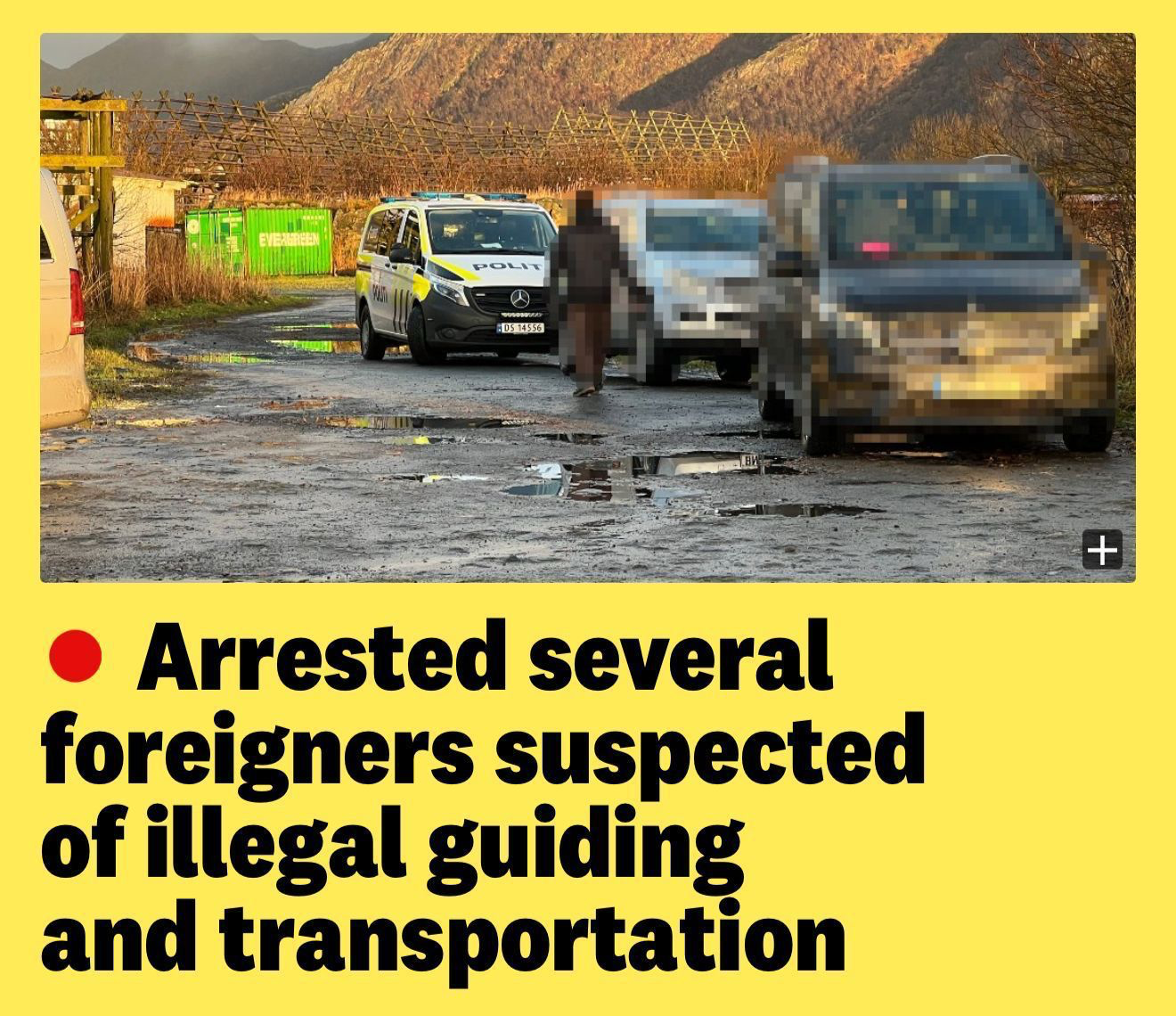
For years, the dream of capturing the Northern Lights in Iceland or the jagged peaks of Norway’s Lofoten Islands has been accessible through a flood of budget-friendly photography tours and workshops. But the landscape is changing fast. Recent and rigorous enforcement of local regulations in both Iceland and Norway has made the headlines and is spreading through the photography community like wildfire. This blog aims to give some more information to those who aren’t aware of what’s going on and the significance this will have on what photography tours will look like in future.
This blog is purely informational, to ensure people are aware of the potential risks when booking a tour which is deemed ‘illegal’. If you’re planning to join a photography tour or workshop, the question is no longer just about the price tag; it’s about whether your tour is actually legal.
Increased Police Controls
Over the past few months, there has been a significant shift in how authorities handle tourism. In places like Iceland and the Lofoten Islands, illegal tour operations are now firmly on the police's radar, and with peak season for winter tours right now, there are daily news articles about roadside spot checks where police specifically target illegal photography tours (Amongst other things). They aren't just checking for speeding; they are verifying commercial driving licenses, transport permits, work permits and insurance. More and more tours are being stopped mid-route, leaving groups stranded because their guide was operating illegally, rather than as a licensed business.
A maze of different regulations
One of the biggest challenges for operators is that each country has its own specific, complex regulations. What is legal in one country could be a criminal offence in the next:
In Iceland: Operators must obtain a specific operating license from the Icelandic Transport Authority, and the vehicle must be registered for professional passenger transport. Operators must also be a certified travel agent and have the necessary insurance and safety plans to run tours.
In Norway: Operators must have a Taxi License, which requires a medical check and a clean criminal record. The vehicle being used also needs to be covered by a permit or specific dispensation (Depending on the county).
Because these rules are written in local languages and buried in different government departments, it is incredibly difficult for a casual traveller to know if their guide or tour is compliant.
The increase in regulations and enforcement
Countries like Iceland and Norway have significantly tightened the screws on commercial tourism. It isn’t just about having a camera, knowing a few locations and renting a van anymore. To operate a legitimate photography tour, guides now face a gauntlet of legal requirements:
Commercial Licenses: In the EU and EEA, driving paying clients in a standard rental car is illegal. Operators must have a D or D1 driving license and must complete a CPC course to obtain a special code on their driving license, indicating that they are allowed to drive for hire or reward.
Special Permits: National parks and protected areas now require specific commercial filming and photography permits. Operating without them is considered a violation of land-use laws.
Professional Insurance: Legitimate tours must carry high-level liability insurance and, in many cases, belong to a Travel Insurance Fund to protect consumer payments.
EU Package Travel Directive and Linked Travel Arrangements: Anyone selling a tour or workshop anywhere in the EU (European Union) or the EEA (European Economic Area) as a package with 2 or more services (Which photography workshops are) over 24 hours is required to register with the EU Insolvency Fund and pay a bond of 10,000-100,000 Euros to protect their clients.
Work Permits: Non-EEA guides (such as those from the US, UK or Asia) often require specific work permits to lead groups in EEA countries, even if their business is based abroad. In Iceland specifically, someone who is not an EEA resident is unable to apply for the required permits to run tours there, they would need to use a local guide or company.
Why "Cheap" could cost you everything
The temptation to book a budget workshop led by a "social media influencer" who flies in for a week is high. However, the risks of booking an unregulated tour have evolved from a "minor inconvenience" to "holiday disaster."
The possible consequences
1. Tour being shut down
Authorities in both Iceland and Norway have increased roadside spot checks. If the police determine your guide lacks the proper commercial driving permit, vehicle registration, driving license or work permit, the tour ends on the spot. You could be left on the side of the road in a remote fjord with no transport and no recourse.
2. Financial impact
Unlicensed operators rarely have the required insurance or financial bonds required by law. If the tour is shut down for noncompliance with regulations, the money you paid for your "cheap tour" is likely gone forever. Standard travel insurance policies will not cover losses resulting from illegal activity; it is your responsibility to check that you are booking a tour that is operated within the relevant laws of the country you are visiting.
3. Deportation and Legal Trouble
This is the "horrible" impact few photographers consider. If you are participating in a tour that is deemed an illegal commercial operation, you may be treated as more than just a victim. In extreme cases, participants can face questioning by police and immigration authorities. If your presence is tied to an illegal tour or workshop, depending on the country you are in, you risk being deported or banned from the Schengen Area, ruining your ability to travel to Europe for years.
How to choose your next tour or workshop
Before you hit "Book Now," do your homework. A legitimate operator will be happy to provide:
Their Business Registration details
Proof of Insurance cover
Proof that they are part of the EU Insolvency Fund
Proof of a commercial driving license and required permits for the country in which the tour will take place
Confirmation that they hold the necessary National Park permits
If the price looks too good to be true, it probably is!
Why "Cheap" Often Means "Illegal"
Why does a professional photo tour cost 4-6,000 Euros, whilst an influencer or up-and-coming photographer charges just 1,500-2,000 Euros for ‘The same trip’? The price gap isn’t about profit; it is the cost of operating within the law. Legitimate companies carry massive overheads that other operators simply ignore. This includes mandatory commercial insurance (which can cost thousands per year), VAT and local income taxes, membership in travel insurance funds that protect your money if the company goes bust, hiring local guides and drivers, and the ever-increasing expenses in the form of hotels, flights and vehicle rental.
Operators that follow the rules use licensed commercial vehicles, which are significantly more expensive to rent and insure than a standard rental car, they also need to pay for permits and licenses in some of the countries in which they operate. To operate legally in some countries, the requirements often go beyond just paperwork and insurance; they require hiring a local guide and driver, which adds a huge cost to organising a workshop or tour, especially when you consider the average salaries in Nordic countries. This is currently the case in Lofoten, Norway.
Why is this important?
We have all heard the horror stories of tours that have gone horribly wrong, whether it is due to poor planning, lack of knowledge on the part of the guide, or a storm that will force plans to change. Operators who are undercutting the market by charging much less for tours are unlikely to have contingency funds to cover an extra night in a hotel for all participants if a storm forces them to change plans. These situations are not uncommon, and unfortunately, many people don’t think about these things when factoring in the price of a workshop.
Conclusions
When you pay a professional rate, you aren't just paying for a guide; you are paying for a legal safety net that ensures the tour and your presence in the country are authorised. If the price seems too good to be true, it’s likely because the operator is cutting corners on the very legalities designed to protect you. The era of the "cowboy" photo tour is over, and while prices will certainly rise to cover the costs of doing things legally, the peace of mind is worth every penny.
These changes are why I hire a local guide for my Lofoten Photography workshops and tours, and why I have applied for and obtained all the required permits and licenses to operate tours legally in Iceland.
Further reading
Cody Duncan, a local guide in Lofoten, has written an article about the situation in Lofoten previously; you can find it here.
The Icelandic Professional Photographers Association has also put together an article about the rules in Iceland; you can find it here.
Disclaimer: This is an extremely complicated topic about the current fast-changing landscape of photography workshops. I will write more about this subject in the coming months as things become clearer, but right now, just be careful which tours you book, or it could end up being a nightmare trip instead of the blissful photography holiday that you have been working hard to afford and looking forward to attending!
Note: The information in this blog is correct as of 5th February 2026 and has been confirmed with multiple sources and local contacts in both Iceland and Norway. I will keep this blog updated with any further updates.
Update 10th March 2026:
Since writing this blog, several more tours have been stopped by the authorities in Northern Norway, indicating that enforcement is being stepped up even further. Cody Duncan has written a further 3-part blog on this subject with a detailed explanation of what is going on, and how hard it is for even local guides to get the necessary permits and follow the rules: