
Unveiling the Magic and Mystery of Iceland’s Glacial Ice Caves
Iceland, the land of fire and ice, holds within its frozen heart one of nature’s most spectacular and fleeting wonders: glacial ice caves. These otherworldly sapphire sanctuaries, carved deep within the colossal Vatnajökull and other glaciers, offer a breathtaking journey into a world of mesmerising blue hues, intricate ice sculptures, and unparalleled natural beauty. But reaching these icy jewels requires more than just a sense of adventure; it demands respect for the immense power and inherent risks of the glacier, making professional guidance an absolute necessity.
How Glacial Caves Are Formed
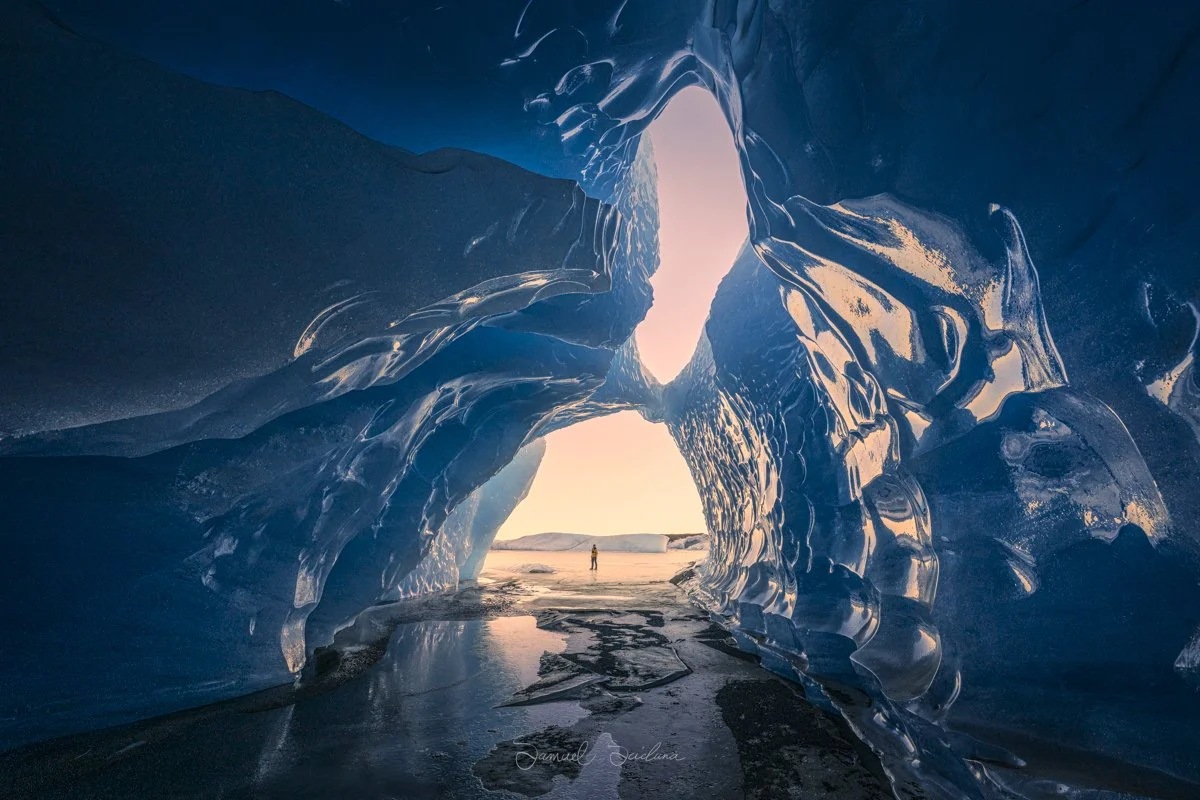
Unlike limestone caves carved by water over millions of years, glacial ice caves are dynamic, ephemeral creations sculpted by the powerful forces of nature within a relatively short time span. Their formation is a captivating dance between meltwater and geothermal heat.
During the warmer summer months, surface meltwater from the glacier's top and sides begins to stream and pool. This water, driven by gravity, seeks out weaknesses and crevasses in the ice, boring intricate tunnels and shafts known as moulins. As this torrent of water flows through the glacier, it erodes the surrounding ice, expanding these pathways into vast caverns. Geothermal heat from active volcanic areas beneath some glaciers can also play a crucial role, melting the ice from below and creating subglacial waterways that eventually form caves.
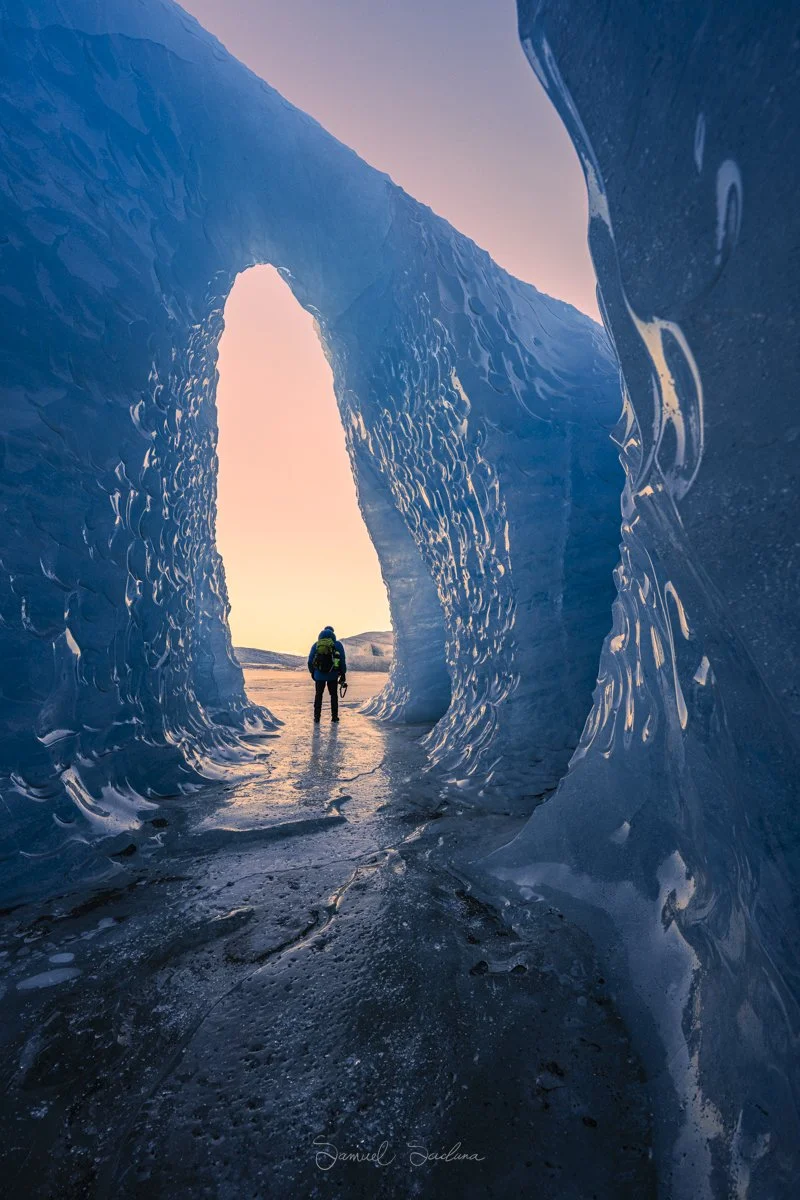
When winter arrives and temperatures plummet, the meltwater flow decreases significantly or ceases altogether, leaving behind these spectacular ice chambers. This seasonality is a defining characteristic of Icelandic ice caves – they are born in summer, explored in winter, and inevitably collapse or reshape with the coming spring. Every cave is unique, and each winter reveals a new landscape of icy wonders, ensuring that no two visits are ever the same.
A Photographer's Dream: Capturing the Ethereal Glow
Photographing Iceland’s ice caves is both an exhilarating and challenging endeavour. The unique lighting, dramatic textures, and extreme conditions require careful preparation and specific techniques to capture the true magnificence of these spaces.
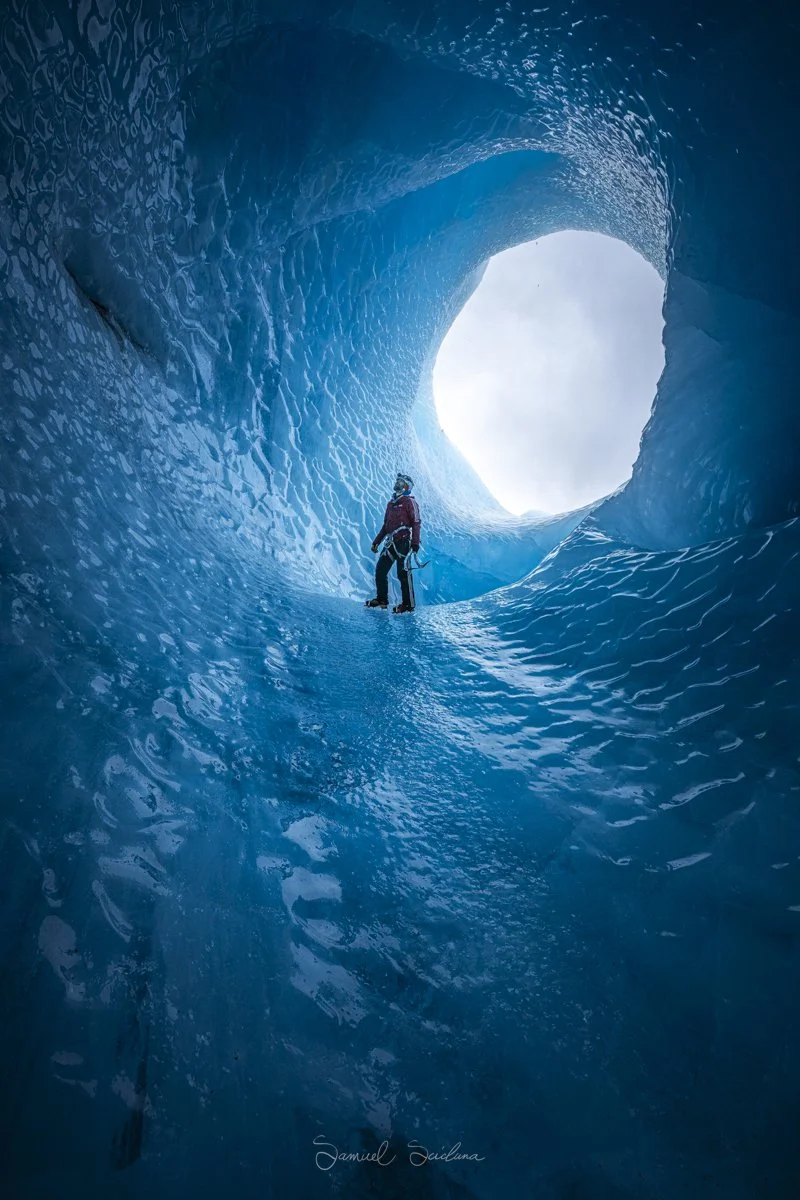
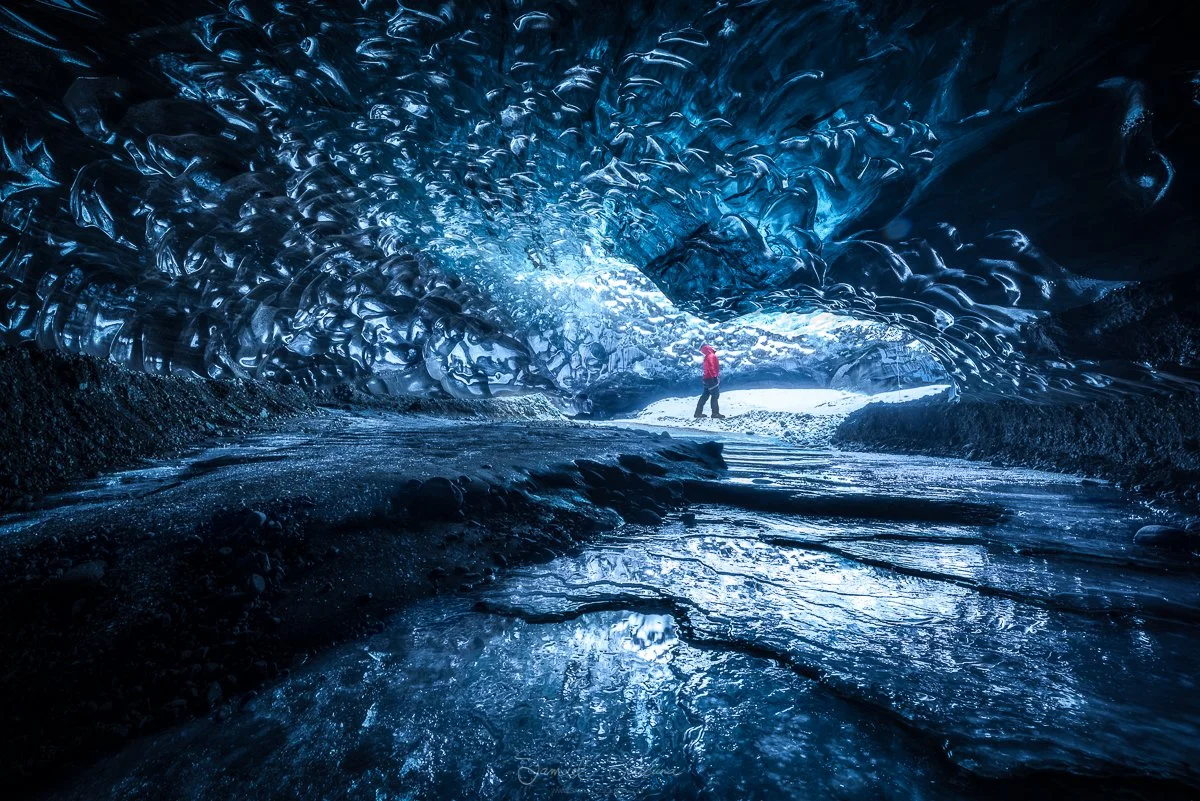
Embrace the Blue: The star attraction is, of course, the stunning blue ice. This hue is a result of the glacier's high density, which has squeezed out air bubbles. As sunlight filters through the ice, the longer (warmer) wavelengths are absorbed, leaving only the vibrant blue light to bounce off the ice crystals and illuminate the cave.
Play with Light and Shadow: The cave’s architecture – sculpted walls, dripping icicles, and layered formations – create a dramatic interplay of light and shadow. Use your camera’s metering system to achieve a balanced exposure, avoiding overexposing the highlights (the brighter parts where light is filtering in) and losing detail in the deepest shadows. A headlamp can be useful for light painting – illuminating specific features or creating leading lines with trails of light.
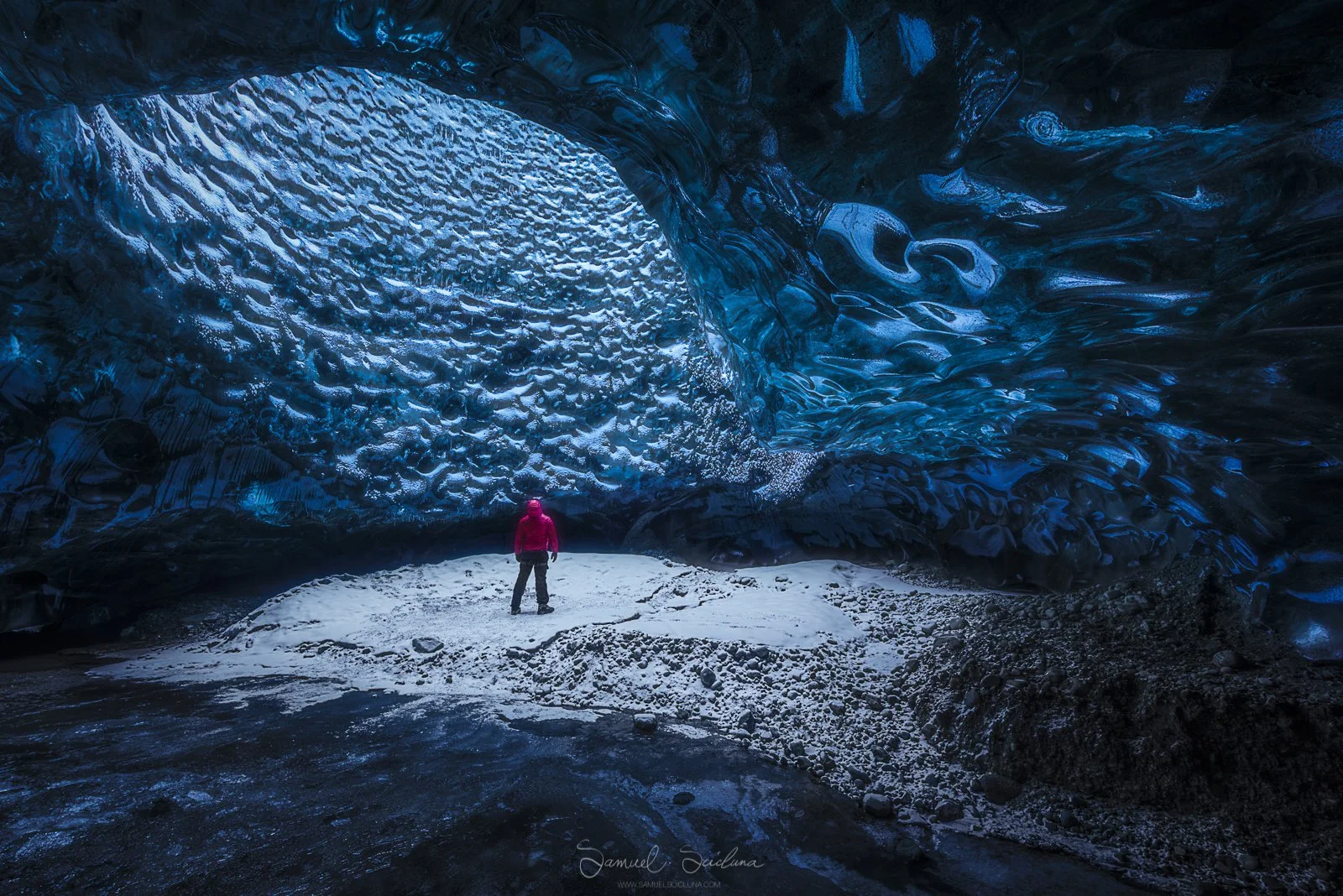
Capture the Scale: The immense size of these caves can be truly humbling. To convey this scale, include a human subject in your composition. A person wearing brightly colored gear against the backdrop of the massive blue ice formations adds perspective and highlights the grandeur of the surroundings.
Mind the Moisture: Cold temperatures and high humidity inside the caves can lead to lens fogging. Keep your camera gear warm before entering the cave and allow it to acclimate slowly. Lens warmers can be incredibly helpful in preventing condensation. Protect your equipment from dripping water and ice melt by using camera rain covers.
Safety First, Always: Remember that photographing in an ice cave involves navigating uneven, slippery terrain. Use microspikes or crampons for traction and prioritize your safety at all times. Avoid getting too close to potentially unstable ice formations.
The Crucial Element: Exploring with an Official Tour Guide
While the allure of exploring these icy realms independently might be tempting, the inherent risks associated with glacial ice caves make a professional guide and an official tour non-negotiable.
Dynamic and Unpredictable Environment: Glaciers are constantly moving, calving, and shifting. These processes, while awe-inspiring from a distance, introduce significant hazards. Cracks can open unexpectedly, ice blocks can fall, and meltwater streams can surge. Qualified guides are experts at interpreting the glacier's language, identifying potential dangers, and assessing the stability of the cave.
Evolving Dangers: The very process that creates these caves – melting ice – also poses constant risks. Sudden warm spells or unexpected geothermal activity can lead to rapid melting and instability. Guides monitor weather conditions, glacier movements, and cave stability daily, ensuring that tours only proceed when safety parameters are met.
Technical Expertise and Safety Gear: Accessing and navigating ice caves often requires specialized mountaineering skills and equipment, including harnesses, ice axes, and safety ropes. Professional guides are trained in glacier travel, crevasse rescue, and first aid, providing essential support and expertise. Official tours equip participants with helmets, crampons, and harnesses, ensuring safety from head to toe.
Regulatory Compliance: Due to the high risks involved, visiting ice caves outside of official tours is heavily discouraged and, in many cases, restricted. Authorised tour operators must adhere to strict safety regulations, carry appropriate insurance, and follow established protocols for cave access and emergency procedures. Choosing an official tour ensures you are travelling with an operator committed to your safety.
Conclusion
Iceland’s glacial ice caves are more than just stunning visual spectacles; they are dynamic, fleeting masterpieces sculpted by the profound forces of nature. Their formation is a testament to the powerful interplay of ice and water, and their beauty offers a rare glimpse into a hidden, frozen world. Capturing their essence requires skill, patience, and preparation, but the rewards are truly extraordinary.
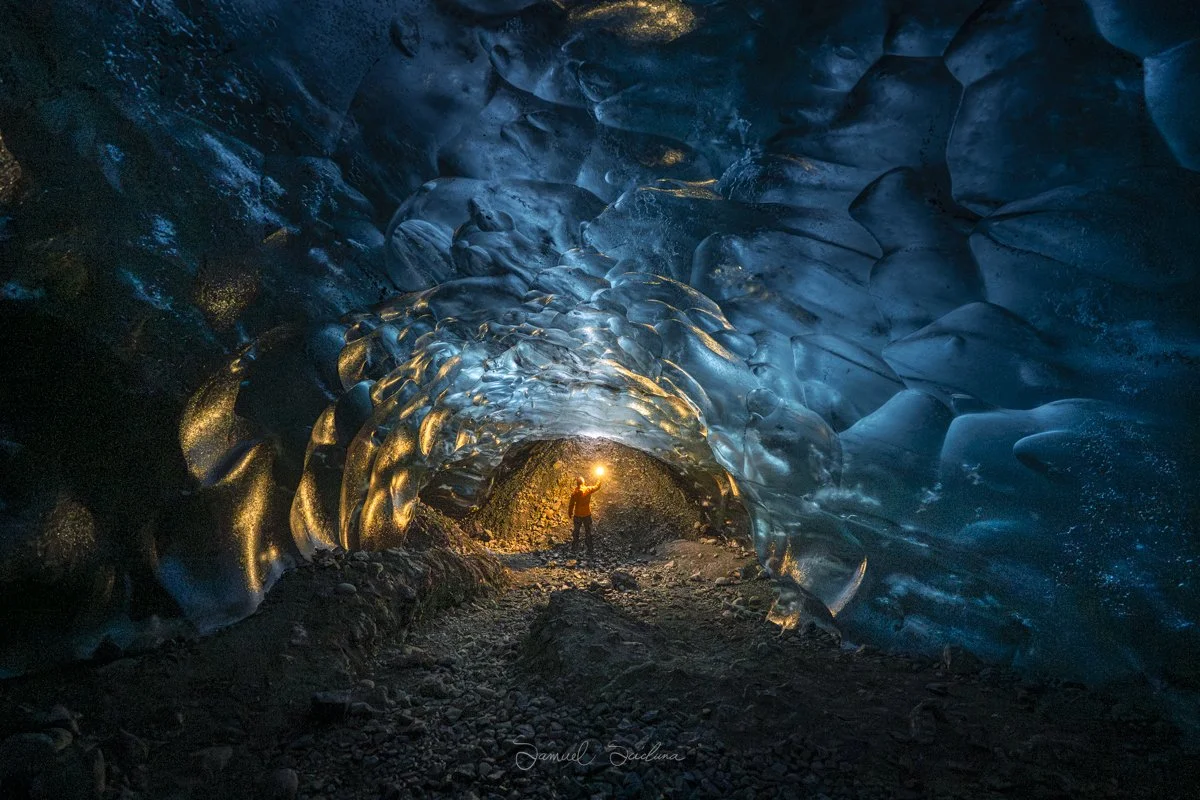
However, the magnificent beauty of these caves is inextricably linked to the powerful and unpredictable nature of glaciers. The risks are real and substantial. People have previously died in ice caves, either due to toxic volcanic gases, parts of caves collapsing or rubble and moraine shifting as the glacier retreats. To ensure your adventure is both magical and safe, choose to experience these glacial jewels with a qualified guide on an official tour. Embrace the awe, respect the power, and cherish the opportunity to witness one of Mother Nature’s most enchanting and ephemeral natural wonders!
I wrote a separate blog about how to photograph ice caves in Iceland, you can find it here.